Kindly · 6 min read
How Kindly makes money
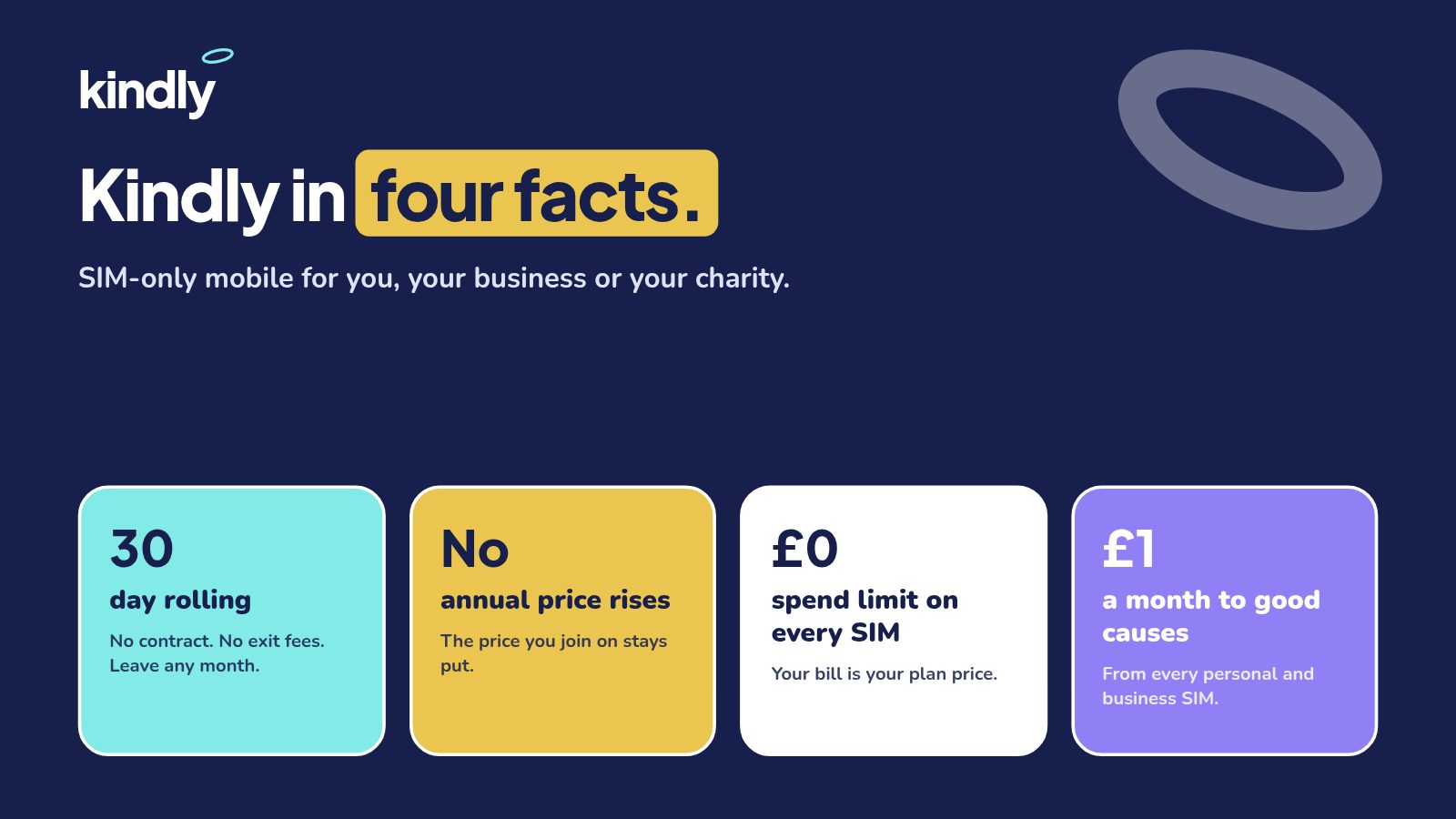
No price rises, no fees, no lock-in, £1 a month to good causes. So how does Kindly make money? Here's where your bill actually goes.
What's the catch? It's a fair question. A mobile network with no annual price rises, no exit fees, no late payment fees and £1 a month going to good causes sounds like it must be hiding something.
Here's the straight answer. Kindly makes money the old-fashioned way: you pay a fair monthly price for your plan, and that price covers the network, the £1 to good causes and the cost of running Kindly, with a modest amount left over so the business can last. That's it. We don't make money from price rises, penalty fees or keeping you locked in.
Where does my monthly payment go?
Every plan price splits four ways.
- Network access. Kindly runs on genuine O2 SIMs. We buy access to the network wholesale, the same way every independent network does, and that's the biggest single cost in your bill.
- £1 to good causes. For every full month you've paid for a SIM, £1 goes to good causes. If you joined through a cause's fundraising page with SIMs for Good, it goes to them. If not, it's shared across charities and community causes.
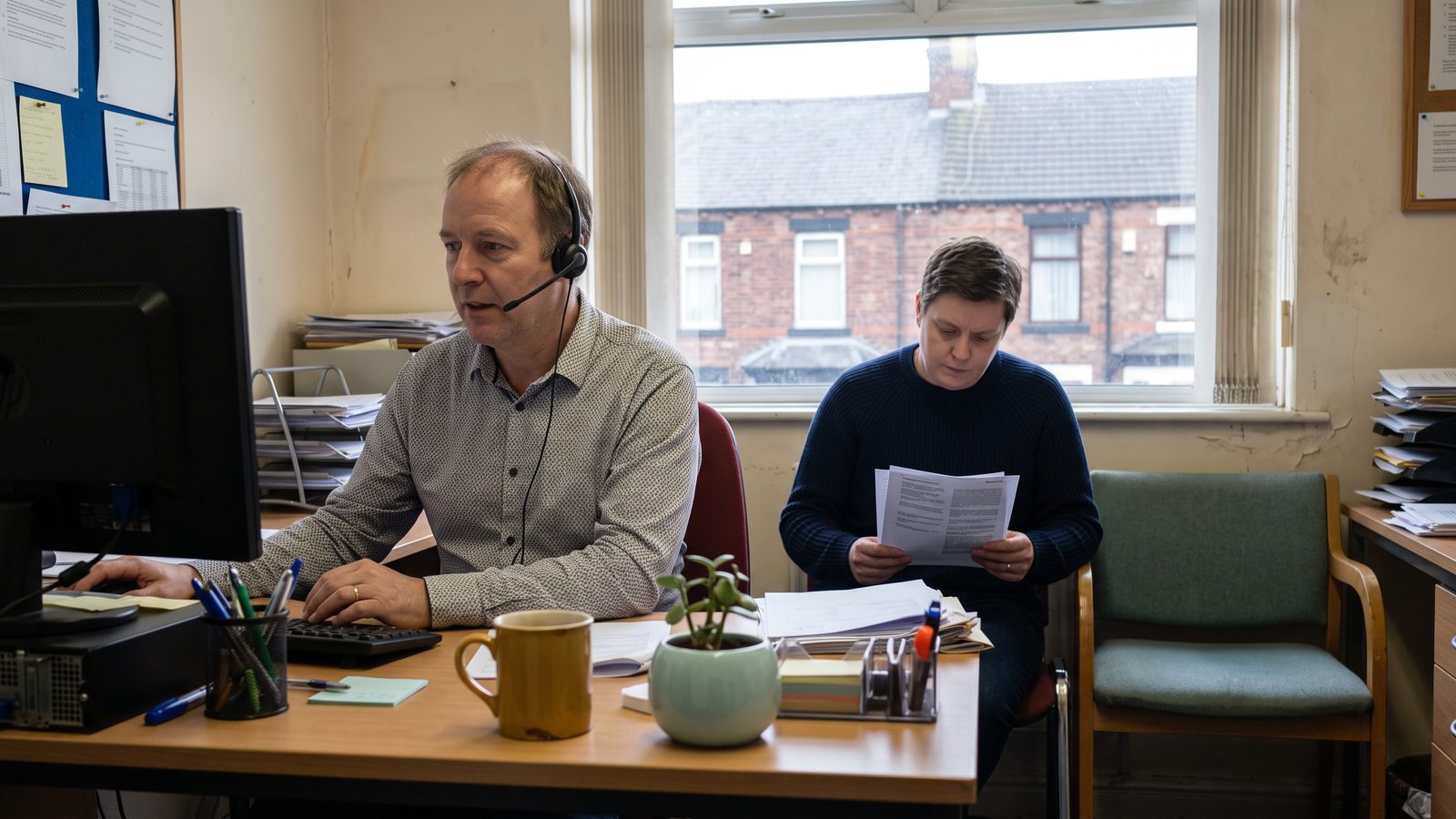
- Running Kindly. A real team in the North East answering the phone, the systems that run your account, payment fees, posting your SIM for free. All the unglamorous bits that make a phone just work.
- What's left. Yes, Kindly aims to make a profit. A business that loses money on every customer doesn't stay around long enough to give anything to anyone. We'd rather be honest about that than pretend otherwise.
On personal plans, which include VAT, a sixth of what you pay goes straight to HMRC before any of the above. Business and charity prices are shown without VAT.
We're not going to publish exactly how much of your bill goes on each line. Wholesale prices are commercial agreements, and they change as we grow. What we can promise is the principle: the price you see is the price you pay, and nothing else is quietly added.
How can Kindly keep its prices fair?
Short answer: we've cut out the costs and risks that push prices up elsewhere. Here's how.
- A small team, low overheads. We're a small team, and we use technology wherever it makes things simpler. That keeps our running costs down.
- Nobody can run up a bill. Every SIM has a £0 spend limit. When customers run up bills they can't pay, someone has to cover that cost, and it usually ends up in everyone else's price. We've taken that risk away.
- No handsets. We only sell SIMs. Selling phones on finance brings big costs and big risks. We'd rather not pass those on to you.
- 30-day rolling plans. We don't tie you in, and we don't tie ourselves into long, risky commitments either. If a bill isn't paid, the SIM is suspended and then the plan ends. There's no long contract to chase, so we don't need a big debt collection or finance team.
- No huge advertising budget. Big networks spend heavily on advertising. We'd rather grow through our community and spend that money on good causes and keeping prices down.
- Strength in numbers. A big part of our job is negotiating with suppliers. The more people who join Kindly, the stronger our hand.
None of this means cutting corners on service. A simpler deal just takes fewer people and less paperwork to run. We'd rather be open about how it works, and we think most people would choose a simple, honest deal over paying for things they never asked for.
How do most mobile networks make extra money?
This is where the difference shows. The mobile industry has a few well-worn ways to earn more from the same customer without giving them anything new.
| How networks often earn extra | What Kindly does instead |
|---|---|
| Annual price rises written into the contract | No annual price rises |
| Long contracts with early exit fees | 30-day rolling plans, no lock-in |
| Charges when you go over your allowance | A fixed £0 spend limit on every SIM, so nothing beyond your plan can be charged |
| Late payment, delivery and reconnection fees | No fees for any of these, or anything else |
| Loyalty penalty: new customers get the deals | Existing customers keep their price while they stay on their plan |
EE, O2, Vodafone and Three all put their prices up every April. We built Kindly so that staying with us never costs you more for standing still.
We should be clear about one thing: Kindly can still change prices in future, as any business can. But we won't do it with an automatic rise every spring, and if prices change for new plans, you keep the price you already pay while you're on your plan.
So does Kindly make any money from extras?
A little, and only when you choose it. If you run out of data, you can buy extra data (2GB for £3 or 10GB for £6 on personal plans). If you travel outside the Europe Zone, you can choose Travel Safe for £7.50 a day (plus VAT on business and charity plans), only on the days you use it, and never more than 10 days' charges a month. You see the price before you choose either. Extra data is paid for there and then; Travel Safe days go on your next bill. Neither ever happens by accident.
That's the line we've drawn. Extras you choose: fine. Charges you didn't see coming: never.
Where does the £1 actually go?
If you joined through a cause's page on SIMs for Good, your £1 a month goes to that cause as regular, unrestricted income for as long as you stay. Causes are paid every quarter, once we've checked they're genuine and have a bank account in the organisation's name.
If you didn't join through a cause, your £1 is shared across charities and community causes. Want it to go to a different cause? Just ask us in writing at hello@kindlymobile.co.uk.
Charity customers work slightly differently. Registered charities already pay £1 less per SIM than business customers, so that £1 is taken off their bill as a discount rather than given as a donation. Same pound, straight back to the charity.
"Most of the mobile industry makes its money by charging people more for staying. We wanted to build a network that earns its money by being worth staying with, and gives some of it away every single month." Dom Ryan, Founder, Kindly Mobile
Why tell you all this?
Because trust should be earned, not assumed. Most mobile takes. Kindly gives. If we're going to say that, we should be able to show our working.
See our plans: personal, business or charity. Or, if you run a good cause, start fundraising with SIMs for Good. It's free to join, and the only thing you do is share.
FAQ
How does Kindly Mobile make money?
From your monthly plan price. It covers network access, £1 to good causes and the cost of running Kindly, with a modest profit left over. We don't earn from price rises, penalty fees or lock-ins.
Is the £1 to charity taken from my bill on top?
No. It comes out of the price you already pay. Your bill is your plan price, plus Travel Safe days if you use them. Nothing else is ever added.
Why doesn't Kindly publish its costs?
Wholesale prices are commercial agreements and change as we grow. We publish the principle instead: one fair price, no hidden charges, £1 a month to good causes.
Will Kindly ever put prices up?
There are no annual price rises. Kindly could change prices for new plans in future, but existing customers keep their price while they stay on their plan.
Sources
- Ofcom: switching and contract rights (background on lock-ins and exit fees).